



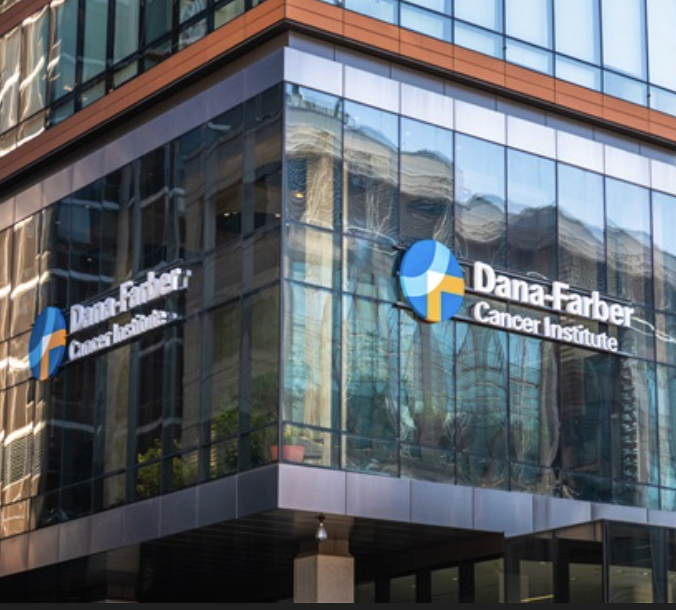
DFF is collaborating with Dana-Farber Cancer Institute to validate a practical MRI-based tool to distinguish benign fibroids from deadly uterine sarcomas before surgery.
Early detection saves live and this work brings that goal within reach.
Lead Investigators: Fiona Fennessy, MD, PhD; Suzanne George, MD
Institution: Dana-Farber Cancer Institute, Sarcoma Center
Clinical Challenge
- Uterine sarcomas are rare but aggressive cancers that can mimic benign fibroids.
- Without reliable pre-operative diagnostic tools, women face uncertainty, delayed diagnoses, and the tragic risk that an undetected malignancy may only be discovered when cure is no longer possible.
Innovation
- Dana-Farber Cancer Institute (DFCI) researchers developed an MRI-based scoring system using seven standard imaging features to predict malignancy risk (Jagannathan et al, Abdom Radiol 2021 46(10):4927-4935).
- Preliminary results: scores of 0–3 predicted benign disease, and scores of 6–7 predicted malignancy with 100% accuracy.
- Validation in a large, diverse patient cohort needed to confirm accuracy and readiness for clinical use.
DFF-Funded Approach
- Compare pre-hysterectomy or myomectomy MRIs of pathologically confirmed leiomyosarcoma (LMS) cases to matched fibroid (leiomyoma) controls.
- Partnered with the Count Me In LMS Project, part of the NCI Cancer Moonshot PE-CGS Network, for direct-patient data collection and DFCI for MRI scans from LMS patients.
- Partnered with Brigham & Women’s Hospital for MRI scans from fibroid patients.
- Five independent radiologists are reviewing and scoring MRIs from leiomyosarcoma, atypical fibroids, and fibroid control patients, results are expected by year end 2025.
Impact
- Validation of this MRI-based scoring system could establish the first practical, non-invasive MRI tool to distinguish benign from malignant uterine tumors.
- By using standard MRI imaging rather than AI-based systems, it ensures broad, real-world applicability.
“Diana’s Fibroid Foundation is a key partner in the advancement of uterine sarcoma research. United by a focus on early diagnosis and the science of disease biology, we strive to give every woman facing these rare cancers the chance to live longer, healthier, and fuller lives” Suzanne George, MD
